

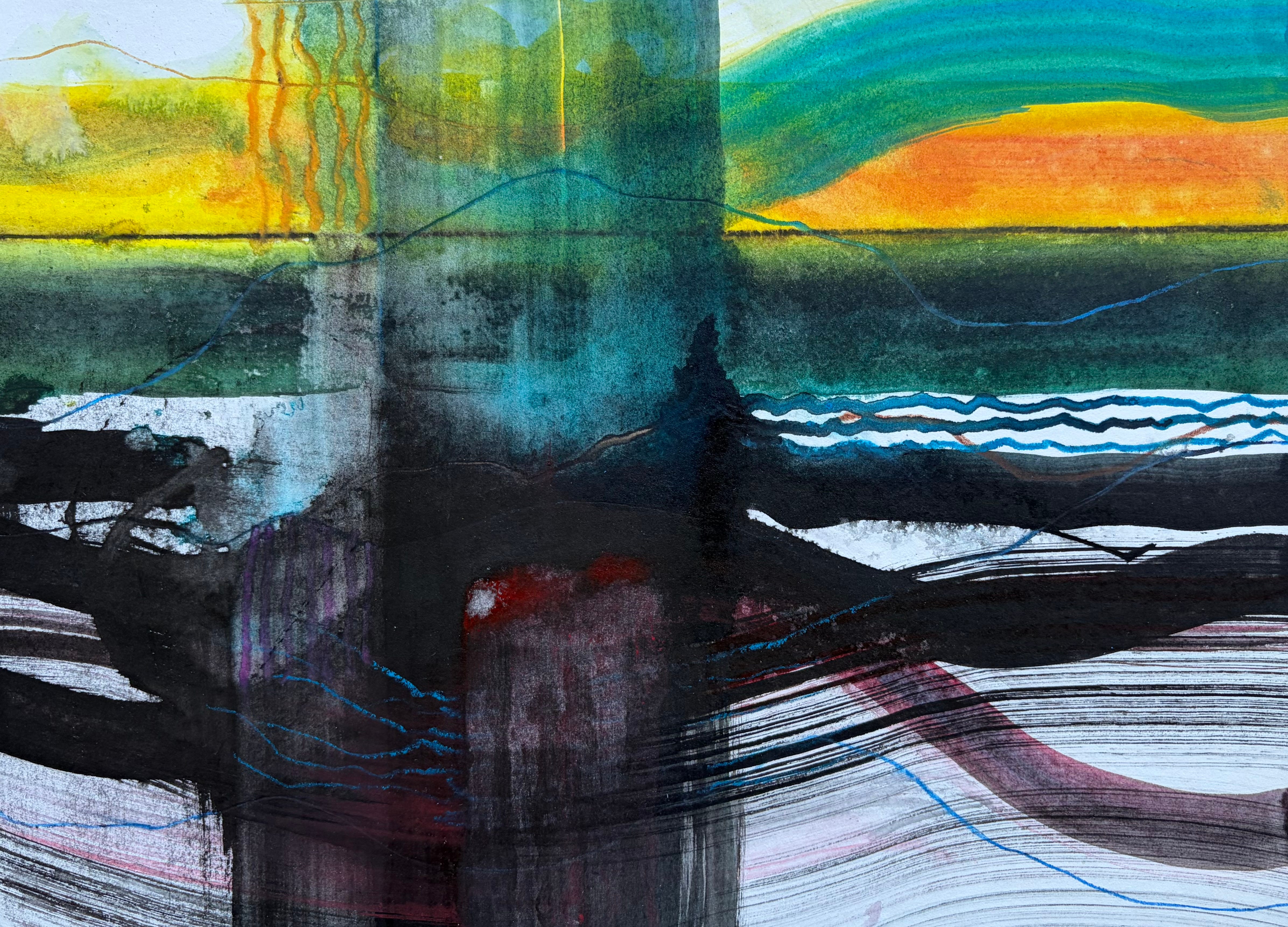
There’s something deeply satisfying about preparing to paint.
Choosing the paper, laying out the inks, watercolours and pencils, arranging the materials I’ll be working with. It’s a familiar ritual, but one I never tire of.
I’ve been thinking recently about how important the materials themselves are to my current practice, particularly in the paintings I make on paper.
Not simply as tools for making an image, but as an essential part of the experience, influencing what happens and what becomes possible.
I’ve spent many years exploring different materials and techniques, and one thing I’ve come to appreciate is the importance of quality.
I certainly don’t believe that expensive materials necessarily make better paintings, or that the cost of materials should ever discourage someone from making art.
Some of the most exciting discoveries can come from experimenting with inexpensive or unconventional materials. There’s something liberating about being able to take risks, make mistakes and explore without worrying too much about the cost.
However, when creating work that may eventually find its way into someone’s collection, there are other considerations.
In my experience, it’s well worth investing in good-quality materials right from the outset. The choices we make at the very beginning can have a significant influence on the longevity of the finished artwork.
Beginning with the paper
I’ve used many different papers over the years, each with its own particular qualities. Some have more texture, others are smoother. Some respond beautifully to washes of colour, while others offer different possibilities for drawing and mark-making.
I don’t believe there’s one perfect paper for every painting.
For my finished paintings on paper, I generally use acid-free paper weighing at least 300gsm. This gives me the strength and durability I need when working with mixed media, particularly when building up multiple layers.
The paper needs to withstand the process. It may be repeatedly wetted, worked upon and allowed to dry. Heavier paper also allows me to flatten the work once the painting is finished. This technique which ensures the paper returns to its original flat state, and involves wetting the back of the paper, pressing it down with weights, and then letting it dry for a day or two or more depending on the size.
Whether the paper is window or float mounted and framed under glass or permanently as heated onto a wooden box canvas, I like knowing that the surface I’m working on can accommodate the demands I might place upon it.
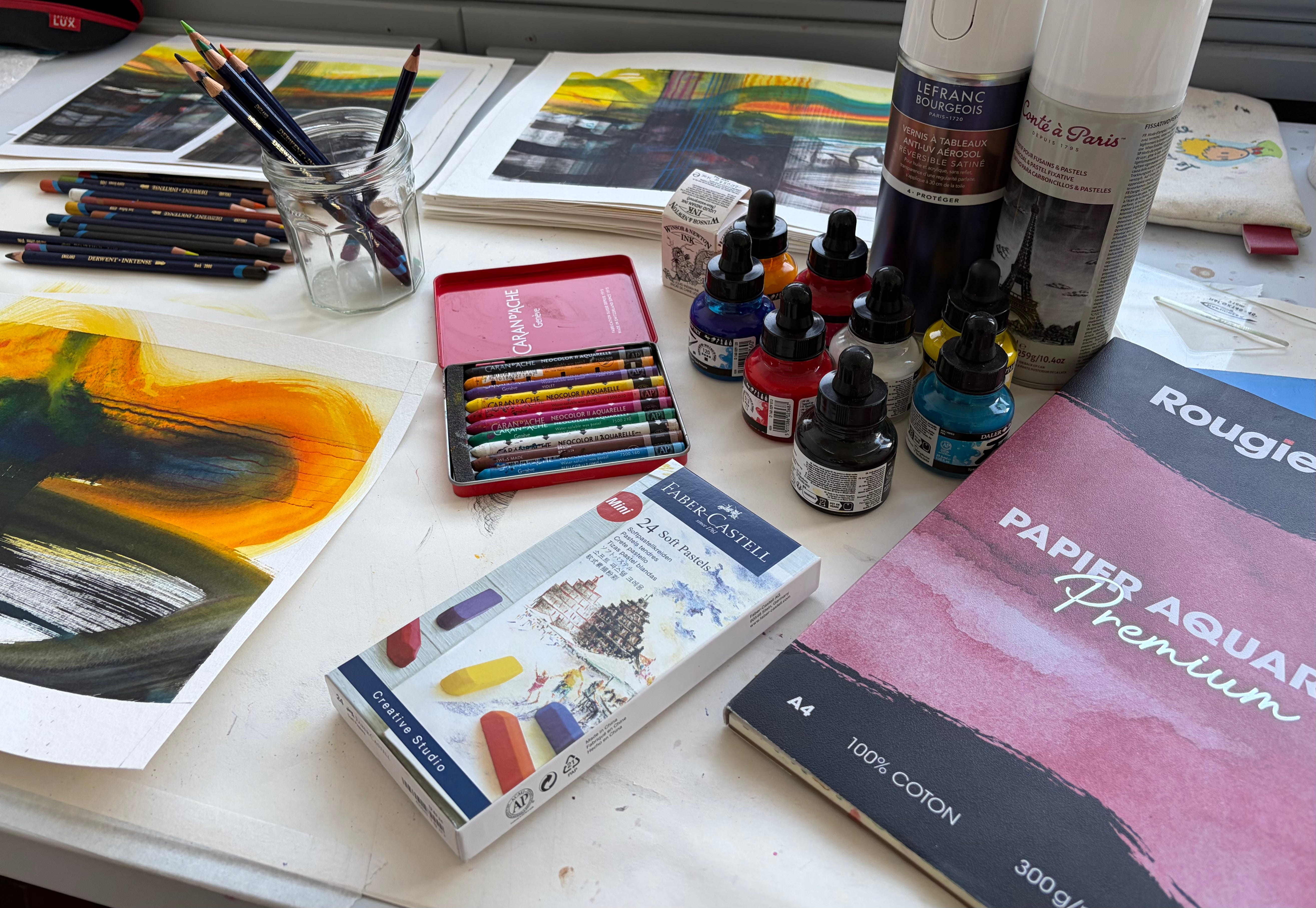
The pleasure of good materials
The same thinking extends to my inks, watercolours, pencils and other media.
I choose professional-quality materials from established manufacturers, having learned over the years that the difference in quality can be considerable.
It’s particularly noticeable in the colours.
Good-quality pigments offer a vibrancy and richness that can be difficult to achieve with cheaper alternatives. I’ve also found that lower-quality materials sometimes lose much of their intensity as they dry.
Of course, some change is inevitable, especially when working with watercolour and ink. Much of the pleasure of these materials comes from their unpredictable behaviour.
But there’s a difference between welcoming the unexpected and struggling with materials that simply don’t perform as well as they should.
The more confidence I have in the materials, the more willing I am to take risks with them.
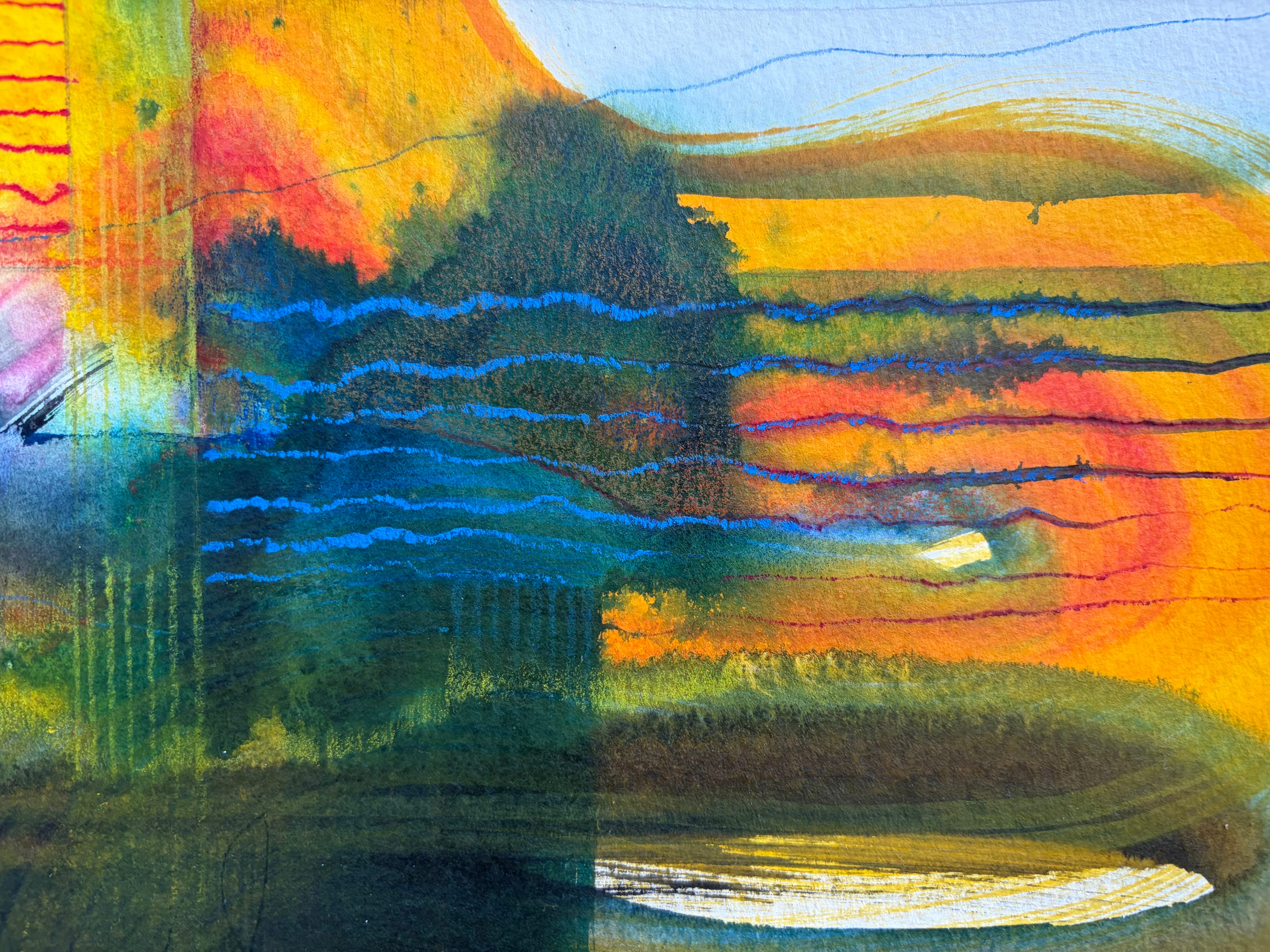
Familiarity and experimentation
Although I’m currently concentrating on paintings on paper, my experience with materials extends much further.
Throughout my life I’ve explored printmaking, carving, modelling, casting, collage, digital processes and many different approaches to painting and mixed media.
Moving between these different ways of working has taught me that no single material or technique has all the answers.
A different surface, an unfamiliar tool or an unexpected combination of materials can interrupt established habits and open up possibilities we might otherwise overlook.
I think it’s important to remain curious about new technologies, materials and techniques, however many years we’ve spent making art.
It’s often the challenge of stepping outside our comfort zone that leads to the most exciting and fresh work.
The painting doesn’t end with the final mark
There’s another part of making paintings on paper that matters just as much to me, although it’s perhaps less visible to someone looking at the finished work.
The care I take in protecting, finishing and presenting each painting.
Once I’ve made the final mark, there are still important decisions to make. How should the surface be protected? How should the paper be mounted? What kind of presentation best suits this particular painting?
I use professional archival materials and appropriate finishing techniques to stabilise and protect the delicate marks and layers that make up my paintings.
I may then choose to carefully window-mount and frame a painting behind glass, or permanently adhere it to a wooden box canvas, giving the work a different physical presence.
Each approach changes how the painting is experienced.


Sometimes I carry out the finishing, mounting and framing myself, while on other occasions I work with a professional framer.
Whichever approach I take, it’s important to me that I remain closely involved throughout the process to ensure that the finished piece reflects my artistic intentions and meets the standards of quality I expect. These final decisions are just as important to me as those I make when placing a mark on the paper.
The finishing and presentation are as much a part of creating the artwork as making the marks themselves.
A responsibility to the collector
There’s another reason why all of this matters so much to me.
When someone chooses to buy one of my paintings, they’re placing their trust in me.
Of course, I hope they’re drawn to the work itself, to its colours, forms and whatever feelings or associations it might evoke.
But I also want them to see and feel the quality of the finished piece. To know that they’re acquiring something that has been carefully made, protected and presented, and that, with appropriate care, can be enjoyed for a lifetime and perhaps passed on to another generation.
For me, this is a question of professional integrity.
Recently, I was reminded of just how important these considerations can be.
I happened to be looking through a folder of my late grandfather’s artworks that had been taken out of storage. Among them was an etching made in 1938, a portrait of my great-great-grandfather.
What surprised me was its remarkable condition.
Almost a century after it was made, the image was still very well preserved.
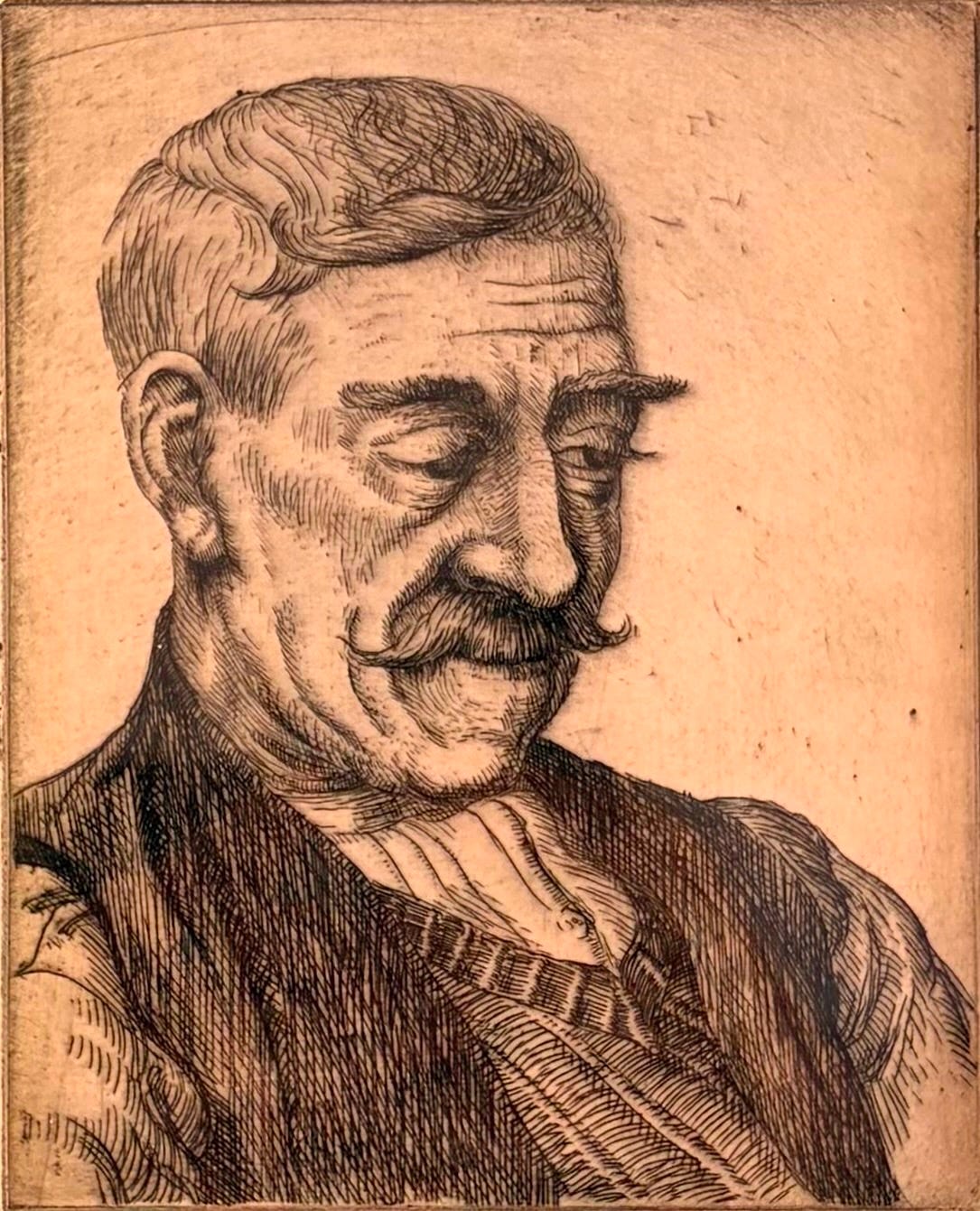
I couldn’t help thinking about the quality of the materials my grandfather had chosen. I suspect that the paper and printing ink were the most important factors in the etching’s remarkable condition, while the care taken in mounting and framing it had helped to preserve it over the years.
There was something quite moving about discovering this portrait of an ancestor and being able to appreciate not only the image itself, but also the craftsmanship and care that had gone into its making almost a century ago.
It brought home to me that a work of art can have a life far beyond the artist who made it, or even the person who first owned it.
Looking beyond the studio
For me, the creative process and the care taken in making and presenting a painting have never really been separate.
Quality is important, but it isn’t a substitute for curiosity, imagination or the willingness to experiment.
And when a painting eventually leaves my studio, I want to know that I’ve given every stage of its creation the utmost care and attention.
We can’t know where our paintings will eventually end up, or who might be looking at them generations from now.
But we can take responsibility for how they’re made and prepared today.