
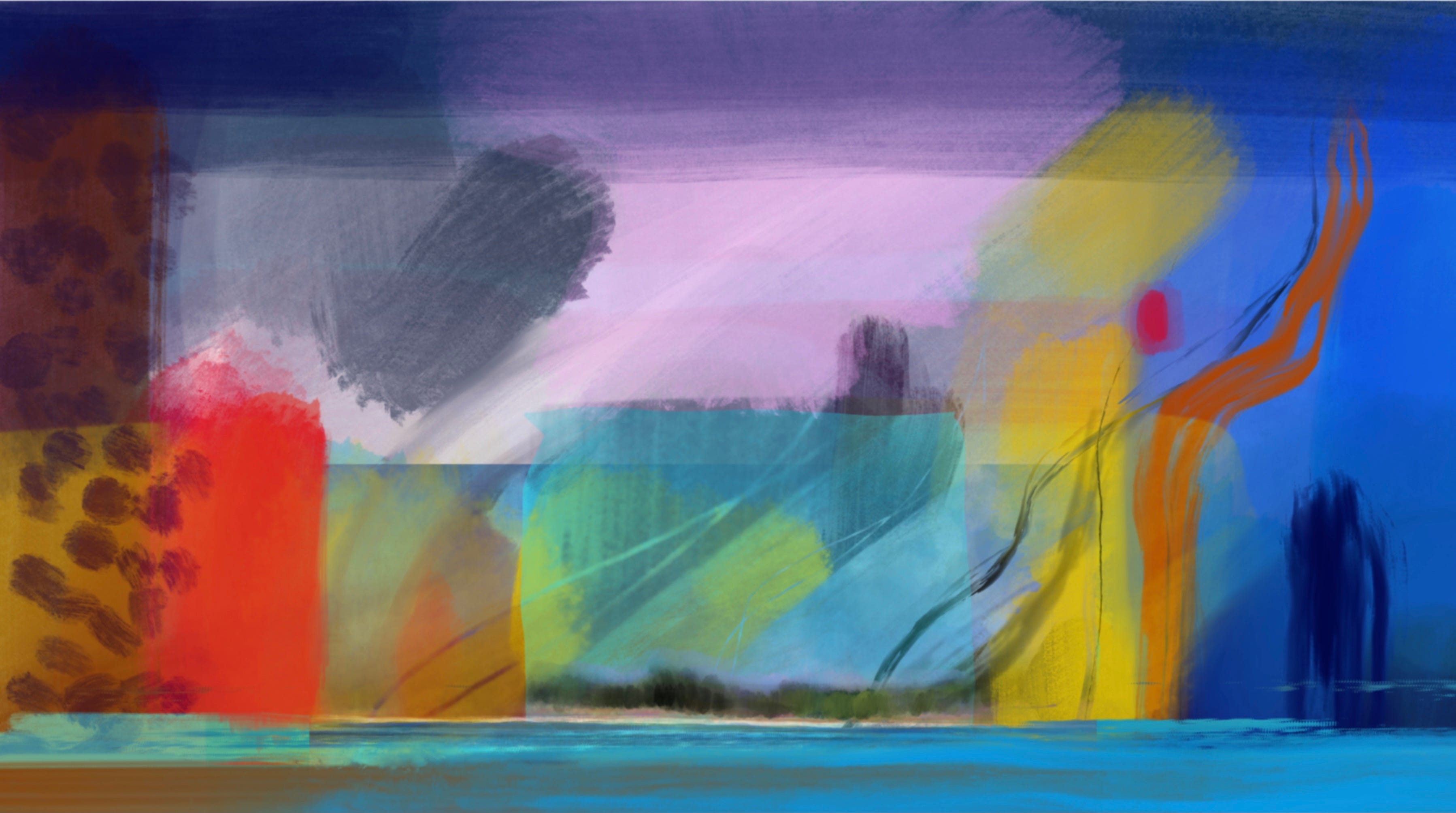
Painting in progress
I’ve always felt that painting, in its broadest sense, when approached intuitively, can become a process that runs parallel to many spiritual practices. Is that a romantically metaphorical view of the creative act? Perhaps. Yet it is also full of light and hope, if we are willing to remain with the light.
When every brushstroke and mark becomes a leap of faith, there is a trust that something other than ourselves may flow through us, as if the universe is using us as a vessel through which the unseen aspects of experience can be revealed. Painting, at its best, can feel less like an act of making and more like an act of listening.
What I find particularly compelling is that painting is such a profound contradiction when viewed this way. On one hand, it demands years of technical knowledge, skill, planning, and careful decision-making. On the other, a good painting often requires the artist to relinquish certainty, quiet the analytical mind, and take a risk. It asks for both mastery and surrender.
Perhaps that is one way we can recognise a truly successful painting: it holds technical knowledge and mystery in equal measure. It honours both the seen and the unseen, carrying a respect and reverence for each. The painter learns not only how to control the medium, but also how to step aside and allow something unexpected to emerge.
Painting lives in the fertile territory between certainty and mystery, between what is seen and what remains just beyond reach. It is an act of attention, imagination, and faith in possibility. And perhaps that is why I continue to return to it: each painting offers another chance to begin again.