

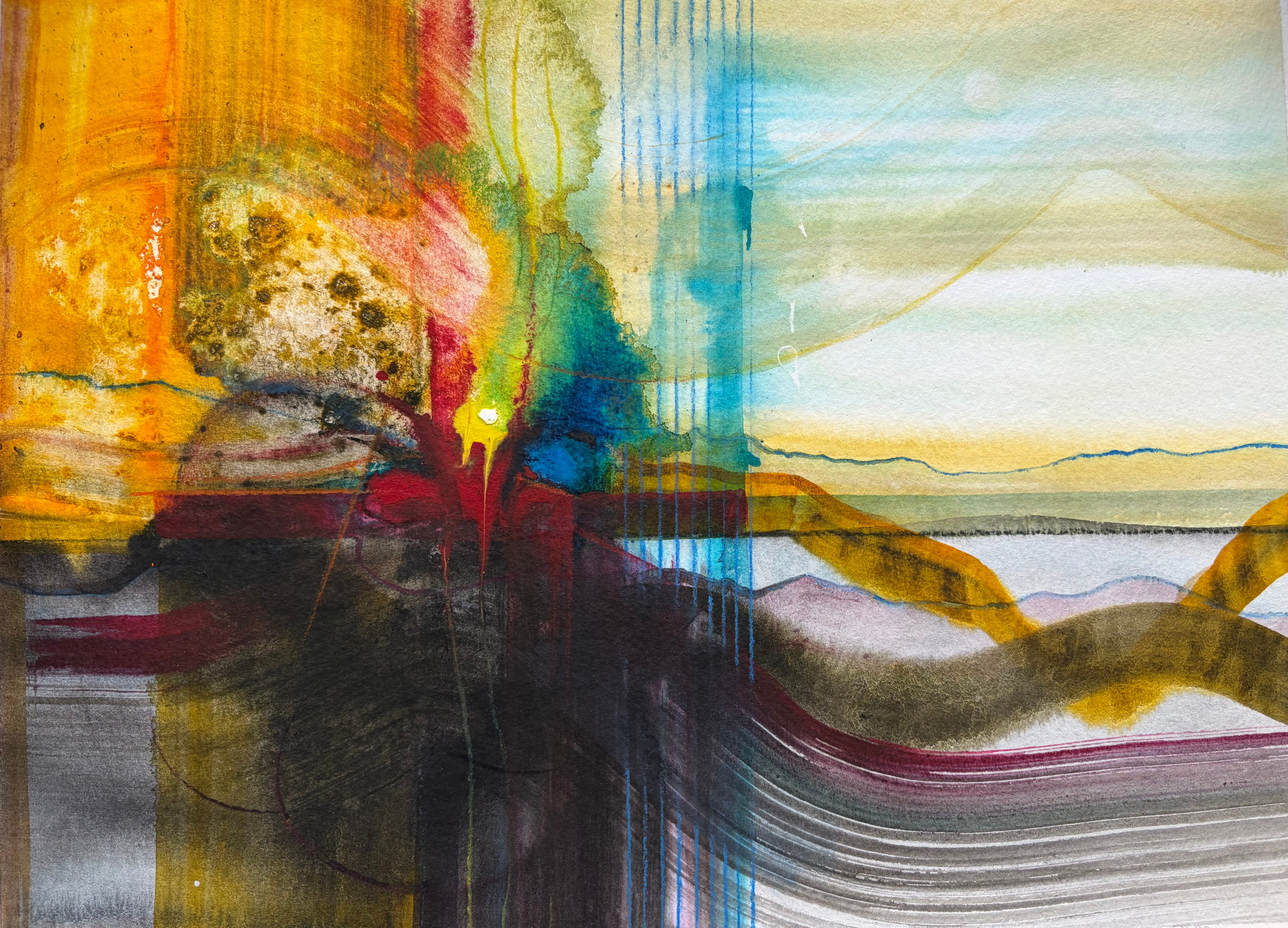
I’ve been thinking recently about what it means to become a stranger to one’s own art.
The thought was prompted by a wonderful recent essay from Matthew Burrows MBE , whose reflections on artistic practice I’ve been following with great interest.
Burrows’ essay explores the idea of voluntary exile, of setting out into unfamiliar territory without a predetermined destination. He draws a parallel between wandering through the landscape and the experience of painting, describing the relationship between intention and attention, and the possibility that we might need, from time to time, to become strangers to our own artistic practice.
Something about this brought together several thoughts and experiences that have been occupying me recently.
After many years of painting, I’ve become increasingly aware of how easily experience can turn into habit. We develop ways of working that become familiar, techniques we trust, decisions we make almost without thinking. There’s comfort in that familiarity, and a certain confidence that comes with knowing what we’re doing.
But I wonder whether that confidence can sometimes get in the way of discovery.
A lesson from Rosemary
I remember a wonderful tutor called Rosemary during my art foundation course. I can’t recall exactly what prompted her intervention, but she clearly felt I needed to break away from my familiar ways of drawing.
Her solution was to make me draw with aluminium sheeting.
Not on aluminium, but with it.
I had to cut, bend and spot weld pieces of metal to create marks. The familiar relationship between hand, drawing implement and surface was completely disrupted. I could no longer rely on the gestures and techniques I’d developed. Every mark required a different kind of thought and physical engagement.
The process was literally painful. The sharp edges of the metal inevitably cut my hands, which were completely unfamiliar with this new medium. At first I was angry. My mind played all sorts of games with me, offering every reason why this was a futile exercise that would lead nowhere except to a bloody mess!
But something deeper, a quiet intuition, kept nudging me onwards. And gradually, something unexpected began to happen. This strange and unfamiliar experience demanded my complete attention. I couldn’t fall back on habit or work on autopilot. I had to be fully present, absorbed in every movement, every decision, every mark.
I remember the challenge vividly, and the breakthrough that followed.
What had initially seemed an almost unreasonable restriction became an extraordinary opportunity. By taking away the tools and methods I understood, Rosemary had opened up possibilities I might never have discovered otherwise.
I was forced to stop knowing what I was doing.
Looking back, I think that experience taught me something important about artistic freedom. It doesn’t always come from having more choices. Sometimes it comes from having our familiar choices taken away.
And perhaps the greatest obstacle to discovery is the assumption that we already know how to proceed.
The return of mystery
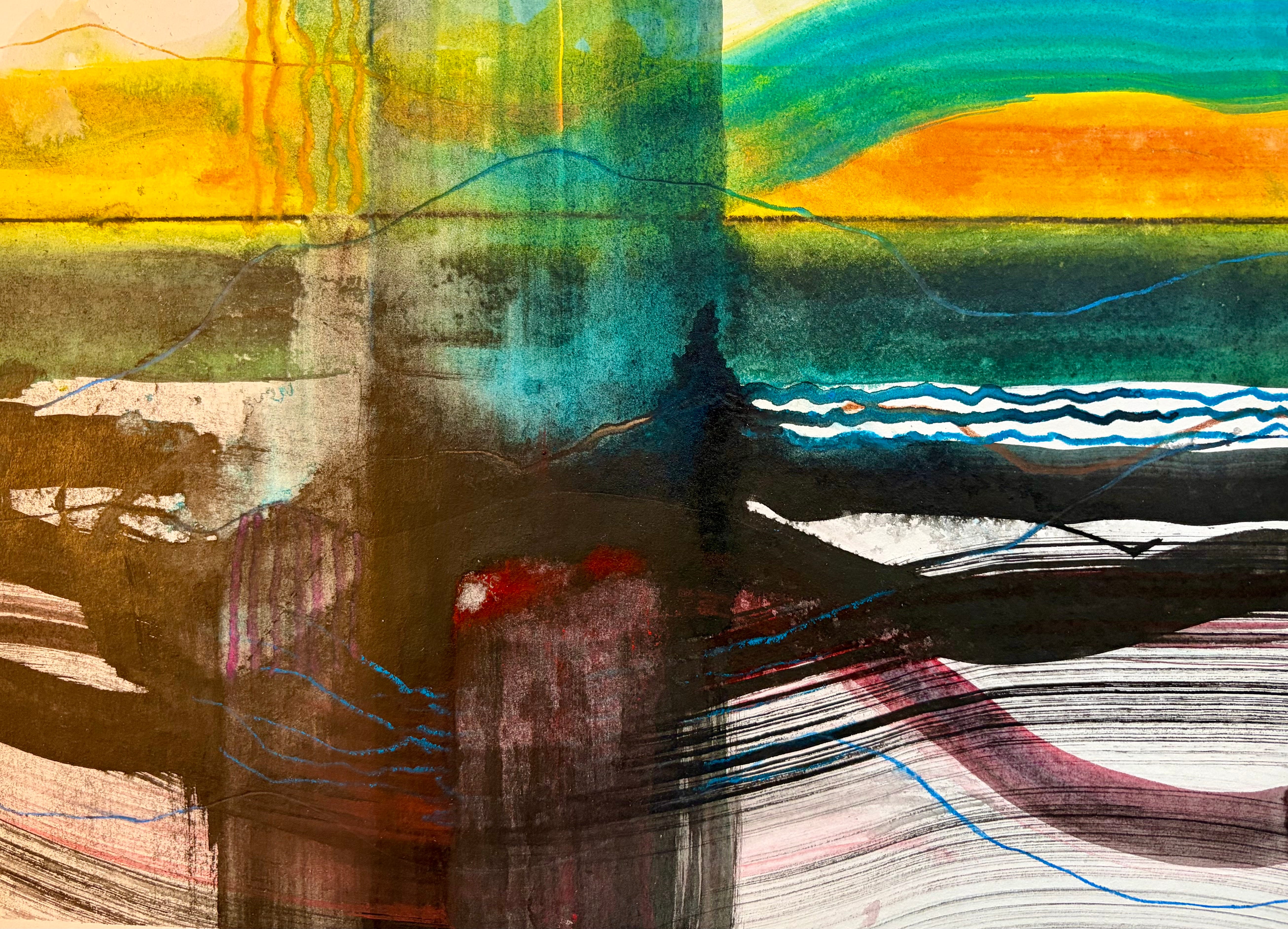
Something similar, although less dramatic, has been happening in my painting recently.
I’ve been exploring the relationship between intention and attention, between beginning with some sense of direction and allowing the painting to develop in ways I couldn’t have anticipated.
I still prepare carefully. I choose my materials, consider colours, and sometimes bring particular memories or experiences into the studio. But once I begin, I’m increasingly willing to let go of where I thought the painting might be heading.
Working with ink and watercolour makes this particularly interesting. The materials have their own behaviour. Pigments move, colours merge, edges appear and disappear. Things happen that I couldn’t have planned, and often wouldn’t have thought to attempt.
The challenge is to remain attentive enough to recognise what is emerging, rather than immediately trying to bring it back under control.
This doesn’t mean abandoning intention or judgement. Years of experience are still there, informing countless decisions. But I’m beginning to see that experience as something I can draw upon rather than something that must determine the outcome.
And something wonderful has happened.
The mystery has returned.
With it has come a renewed excitement and passion to get up each morning and paint. There’s a sense of anticipation that I haven’t always felt so strongly, a curiosity about what might happen today, what might appear on the paper, what unexpected direction the work might take.
I don’t know exactly where this developing practice is leading, and increasingly I find that I don’t need to know.
There’s a freedom in that uncertainty.
Attention and awareness
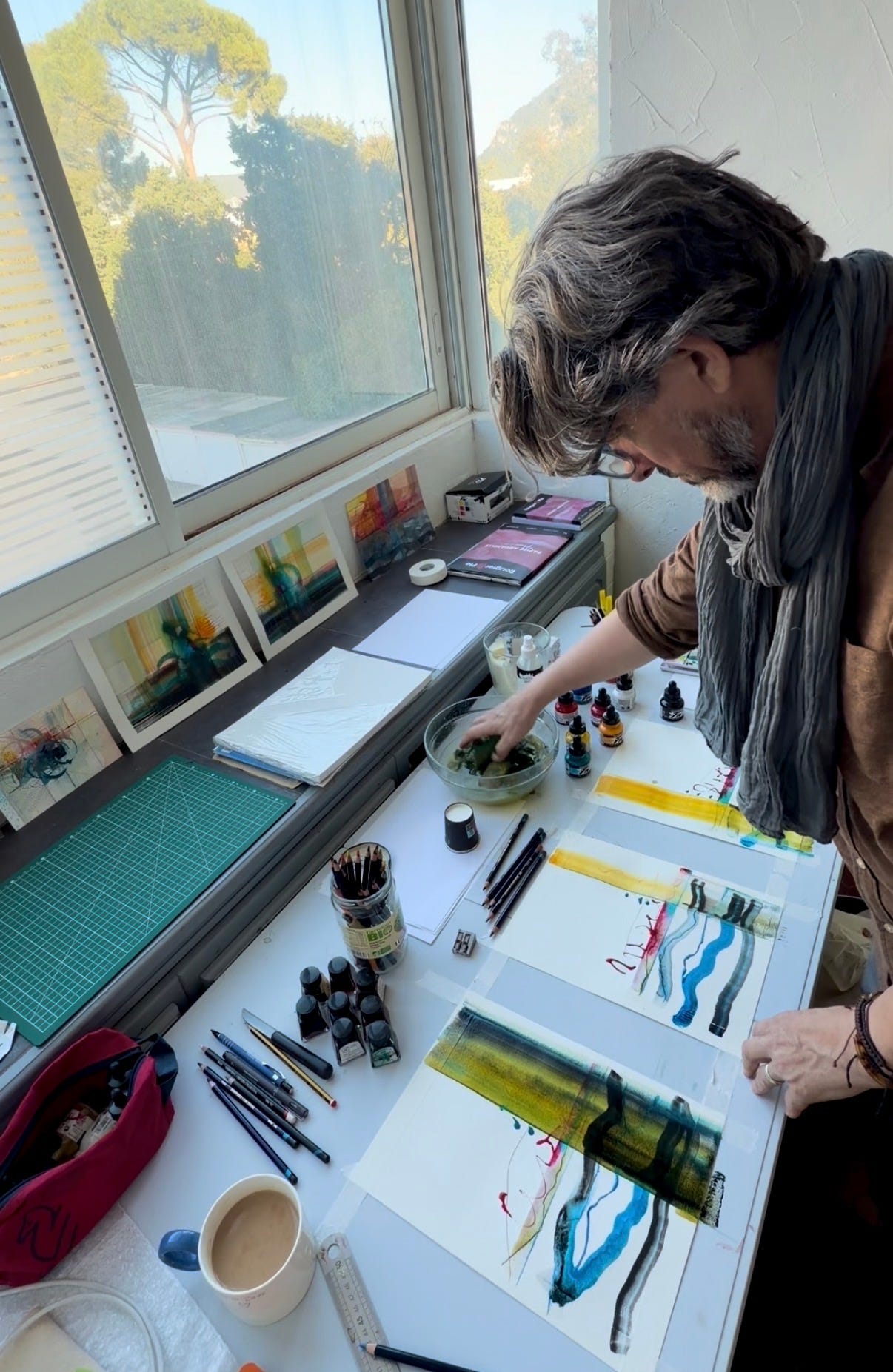
I’ve also been reflecting on the experience of presence while painting, and its relationship to a deeper sense of awareness.
There are moments when the usual stream of thoughts and expectations becomes quieter. I’m no longer thinking so much about what the painting should become, or whether it’s going well. My attention is simply with what is happening.
I’ve spent many years interested in questions of awareness and spiritual experience, and I recognise something of that inquiry in these moments.
Perhaps there’s a connection between becoming unfamiliar with our artistic habits and becoming less attached to the ideas we hold about ourselves.
We accumulate identities just as we accumulate techniques. We develop a sense of the kind of artist we are, the work we make, the things we’re good at. These can become boundaries without our even noticing.
What happens when we’re willing to move beyond them?
I don’t think we need to discard everything we’ve learned. But perhaps we need to remain willing to be surprised, even unsettled, by what we discover.
To allow ourselves, occasionally, to become beginners again.
A new landscape
All of this feels particularly relevant as I look towards 2027.
I’ll be beginning a year-long artist residency in Sanary-sur-Mer, on the Mediterranean coast of southern France. It will give me the opportunity to work in a different studio space, larger scale paintings, and away from some of the familiar patterns of my current environment.
But what excites me most is the possibility of extending my studio beyond its walls.
I’m beginning to imagine the surrounding landscape becoming part of my practice in ways I haven’t yet explored. Walking, observing, drawing, collecting impressions and experiences. Allowing the light, colours, textures and atmosphere of the area to enter the work, perhaps in unexpected ways.
I don’t have a particular project mapped out, or a clear idea of what the paintings might look like.
And that’s precisely what makes it exciting.
There’s something about the prospect of entering a new environment without knowing what it will bring that reminds me of Rosemary’s aluminium sheeting. The circumstances are very different, of course, but the invitation feels similar.
To step outside familiar territory.
To pay attention.
To discover something I couldn’t have anticipated.
The freedom of not knowing
Perhaps what I’m rediscovering is that painting is not simply about developing greater skill or arriving at a more accomplished way of working.
It can also be a way of remaining open to the world, and to ourselves.
The relationship between intention and attention seems increasingly important to me. We need some intention to begin, some willingness to make the first mark or take the first step. But attention allows us to recognise possibilities that intention alone might never have imagined.
And perhaps, if we’re fortunate, those discoveries change us a little along the way.
I think back to Rosemary, to the strange challenge of drawing with metal, and to the excitement of discovering something beyond what I already knew.
Many years later, I find myself experiencing something of that same excitement.
I’m looking forward to entering the studio tomorrow, and to the unfamiliar studio and landscape that await me next year.
I have no idea quite where any of this will lead.
And for now, that feels aligned with where I need to be.